- Brands Logos
- Logo Templates
- Icons
- Vectors
- Font In Logos
- Blog
Cleo is a UK-based financial technology company founded in 2016 by Barney Hussey-Yeo. The company developed a digital assistant, also named Cleo, which offers budgeting, financial planning, and spending tracking services powered by AI. Cleo is designed primarily for Gen Z and millennial users who seek financial independence and smarter money management tools through a more casual, engaging tone. Operating through a chatbot interface available on Facebook Messenger and mobile apps, Cleo aims to simplify personal finance by using conversational AI and gamification elements.
Headquartered in London, Cleo has quickly grown into one of the more distinctive fintech startups in the market, known for its humorous, direct, and at times sassy tone. The brand represents a shift from traditional banking into a more personalized and relatable financial experience.
Cleo’s branding has evolved to reflect its personality-driven, digital-native user base. The current logo represents a more minimalist, friendly, and contemporary design aesthetic compared to earlier iterations that leaned more toward generic fintech styles.
Initially, the visual identity may have featured more conventional tech motifs or serif fonts, but the current wordmark showcases a bold confidence aligned with the brand’s tone. Cleo's evolution has focused on visual simplicity, digital clarity, and a sense of modernity to align with mobile-first user behaviors.
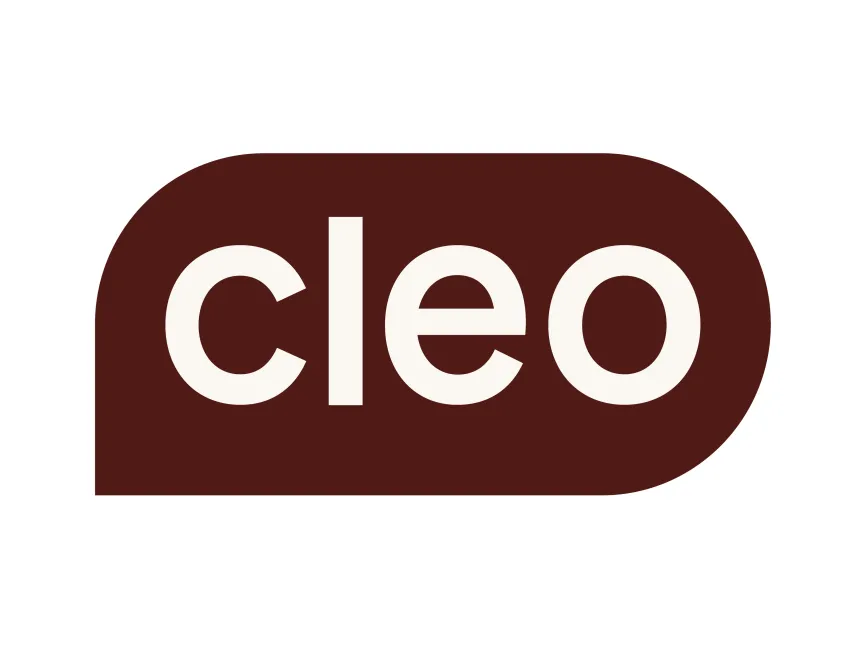
The Cleo logo is a strong example of a modern, geometric wordmark that blends functional typography with a stylized container. It is a logotype (wordmark) without any emblem or standalone symbol, making the brand name the central focus.
Shape and Layout
The logo is placed within a solid, rounded-rectangle speech bubble, pointing to Cleo’s identity as a conversational AI assistant. The speech bubble immediately communicates interactivity, friendliness, and approachability—crucial traits for a brand that operates as a chatbot.
Color Palette
The logo features a deep maroon or rich chocolate brown background, with the word “cleo” in a light cream or off-white color. This high-contrast palette communicates warmth and trust while breaking away from the overused blues and greens commonly found in fintech.
Brown is rarely used in tech, giving Cleo a distinctive presence. It also suggests groundedness, reliability, and subtle sophistication. The neutral contrast enhances readability and accessibility across digital platforms.
Typography
The lowercase, geometric sans-serif typeface suggests friendliness and modernity. The letters are evenly spaced and rounded, which contributes to a feeling of openness and conversational flow. The consistent stroke width ensures clarity at all sizes, from mobile app icons to web banners.
Lowercase usage further supports Cleo’s casual, non-authoritative tone, distancing it from the formal tone of traditional financial institutions. The type appears custom or adapted for branding uniqueness.
Logo Type
This is a wordmark-based logo with an integrated shape. There are no abstract marks or icons, which keeps the brand identity clean, clear, and instantly recognizable.
Usage Versatility
The simplicity and contrast of the Cleo logo make it adaptable to multiple formats, especially on mobile apps, which is crucial for a brand centered on app-based user engagement. The color combination also allows for clear rendering in both light and dark UI themes.
The Cleo logo is available in vector formats such as SVG, AI, and PDF, as well as transparent PNG files. These can be downloaded for free on logowik.com. This makes it easy for designers and brand analysts to use the logo in high-resolution applications or brand documentation.
Cleo’s logo is a prime example of minimalist, functional branding done right in the fintech space. It reflects the core values of the company—approachability, intelligence, and digital-first engagement—through its conversational shape, friendly color tones, and modern typography. As Cleo continues to expand its offerings and user base, its strong, consistent visual identity will continue to be a key asset in maintaining brand recognition and loyalty.