- Brands Logos
- Logo Templates
- Icons
- Vectors
- Font In Logos
- Blog
Hubstaff is a remote workforce management platform that helps businesses track time, manage teams, and improve productivity. Founded in 2012 by Dave Nevogt and Jared Brown, the company emerged to solve the challenges of managing remote teams and freelancers. Headquartered in Indianapolis, Indiana, Hubstaff quickly grew into one of the leading platforms for time tracking and task management, serving thousands of businesses worldwide.
The platform offers features such as GPS tracking, productivity monitoring, payroll integration, and project management, making it especially popular among startups, agencies, and distributed teams.
Hubstaff has undergone a few logo refinements over the years, evolving alongside its brand and user base. Earlier versions featured more literal representations of time and task tracking, while the current design leans into a more abstract and modern identity. The transition reflects a maturing brand — one that has moved from a startup tool to an enterprise-ready platform.
The latest version of the logo is a minimalist, sleek design that emphasizes approachability and professionalism, appealing to both small businesses and larger organizations.
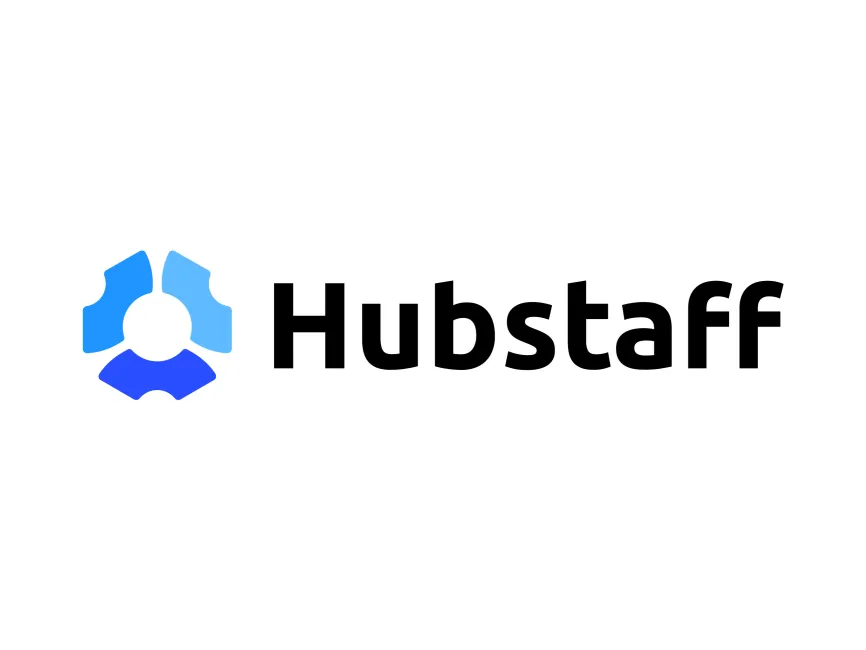
The Hubstaff logo consists of a symbolic icon paired with a bold wordmark.
The icon is a geometric shape composed of three angular elements forming a central circular negative space. This design can be interpreted as a stylized human figure or hub — reinforcing the name "Hubstaff" and the idea of centralizing staff management.
The symmetry and inward-pointing shapes suggest connectivity, collaboration, and efficiency, which align perfectly with Hubstaff’s core functions.
The circular core represents unity and centralization, symbolizing a digital “hub” from which all team activities are monitored and managed.
The wordmark uses a bold, modern sans-serif typeface. The slightly rounded edges of the characters balance professionalism with friendliness. It projects a sense of trust and reliability without appearing rigid.
The clean typography is easily legible across digital platforms and scales well from app icons to web headers, maintaining brand visibility and clarity.
Hubstaff's logo features a gradient blue palette alongside black typography:
Gradient Blue Tones (#4698f1 to #4d46f1): Blue is widely used in tech and SaaS logos because it represents trust, communication, and clarity. The gradient effect gives the logo depth and a contemporary feel, enhancing visual interest without overcomplicating the design.
Black Text: The black in the wordmark conveys strength and neutrality. It contrasts well with the vibrant icon, making the overall brand mark feel balanced and readable.
This combination gives the brand a tech-savvy, professional image while also communicating approachability and efficiency.
This is a combination mark, combining an abstract symbol with the company name. The design is flexible, allowing the icon to stand alone in contexts like favicons, social media avatars, or mobile apps. The full logo, when used together, provides a clear and memorable identity.
The design also leans into minimalism and modularity, key traits in modern digital branding. The icon’s geometric simplicity allows it to be easily animated or adapted for interactive interfaces.
The Hubstaff logo is designed to be scalable and versatile across both digital and print mediums. For designers and marketers looking to use the logo, it is available in vector formats such as SVG, AI, and PDF, as well as transparent PNG, which can be downloaded for free from logowik.com.
Hubstaff’s logo perfectly reflects its brand values: productivity, connectivity, and simplicity. The thoughtful use of geometry, a centralized visual structure, and modern typography signal a company that is both technologically advanced and user-friendly.
Whether managing a remote team or optimizing workflow efficiency, Hubstaff communicates — through its branding — that it is a reliable partner for modern workforce management. The current logo design not only positions the brand as innovative and trustworthy but also ensures visual flexibility for various media and platforms.